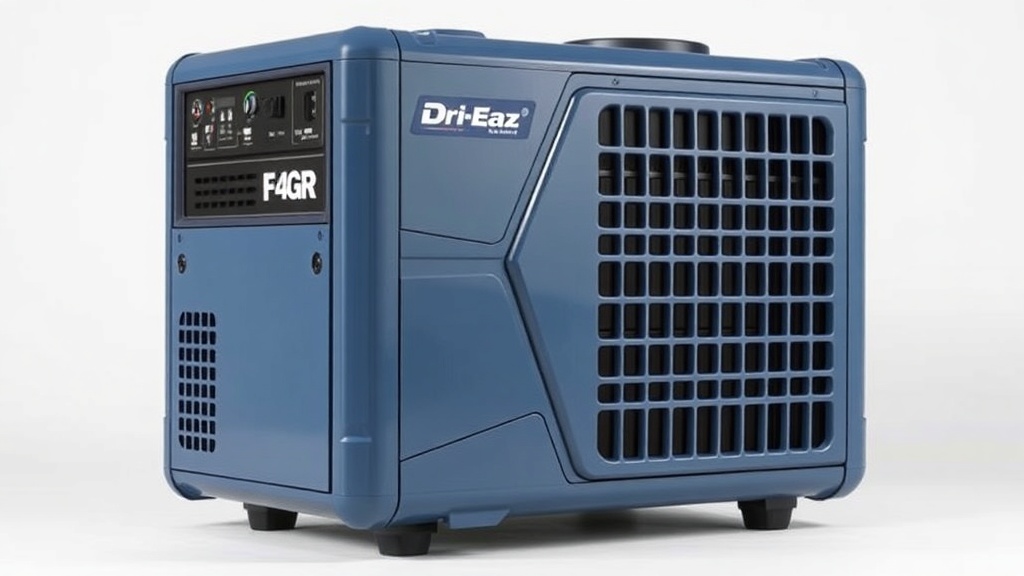
Why RestorePros Recommends the Dri-Eaz F413 Revolution LGR Dehumidifier
When it comes to water damage restoration, selecting the right low-grain refrigerant (LGR) dehumidifier can make the difference between a three-day dry-out and a week-long struggle. The Dri-Eaz F413 Revolution LGR Dehumidifier has earned its place as RestorePros’ top pick for units under £1500, combining robust airflow, exceptional water removal, and long-term reliability. In this buyer’s guide, we break down every aspect of this machine, from real-world performance to cost efficiency, so you can decide if it’s the right tool for your restoration business.
How Does the Dri-Eaz F413 Revolution Achieve High Water Removal?
The F413 Revolution uses advanced LGR technology to pull moisture from the air even in cool, damp environments. Its key spec includes a rated water removal of 95 pints per day at AHAM standard conditions (80°F, 60% relative humidity) and an impressive 150 pints per day at extreme conditions (90°F, 90% RH). The unit operates with a high-efficiency rotary compressor and a dual-speed blower that moves 280 CFM on high and 220 CFM on low, ensuring thorough air circulation across wet surfaces.
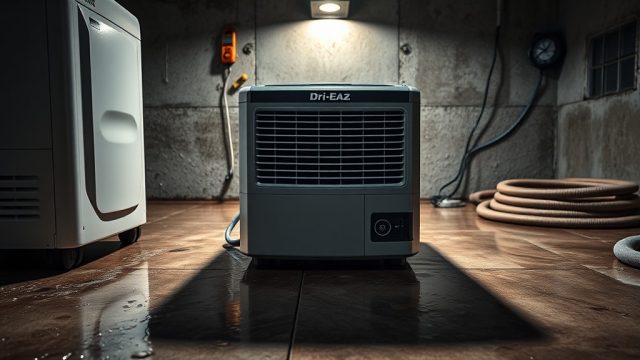
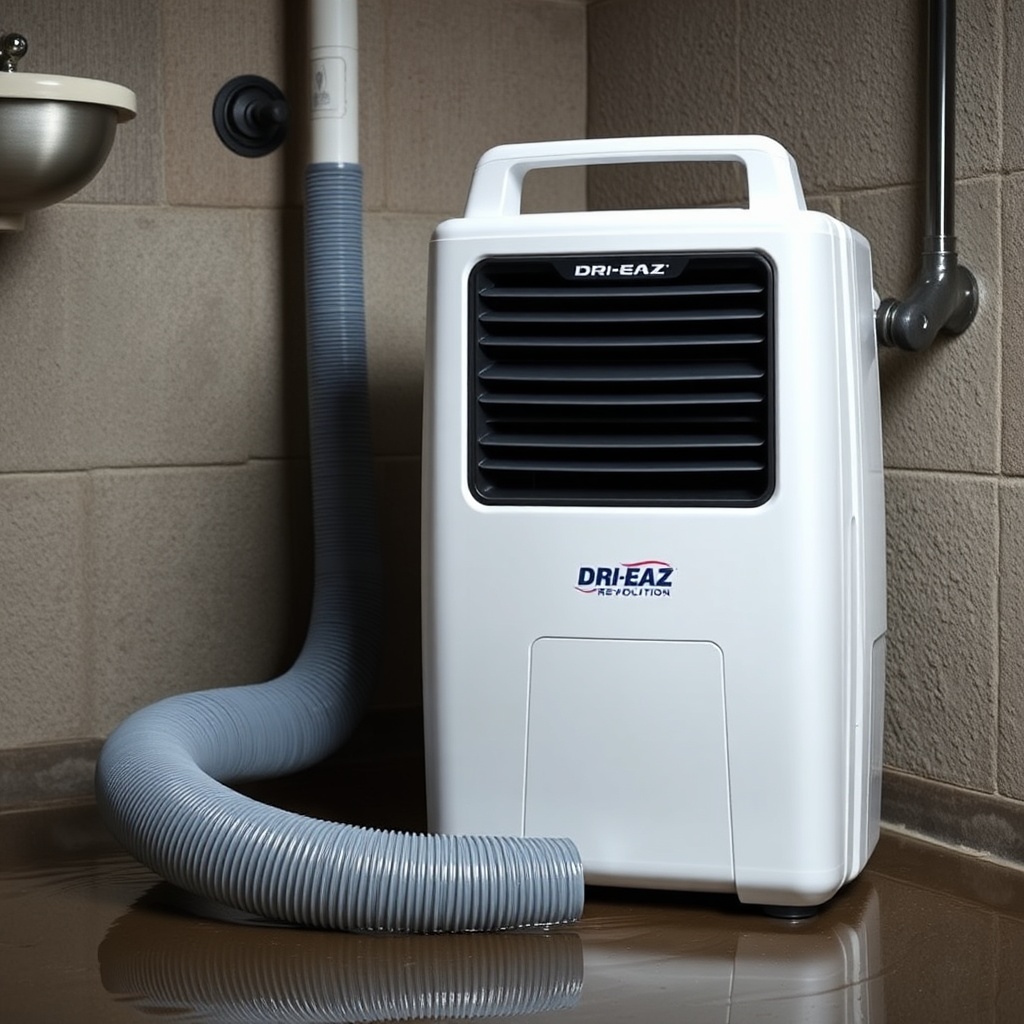
For restoration professionals, this means faster structural drying after floods or leaks. The dehumidifier’s low-amp draw (5.6 amps on high) makes it suitable for residential circuits, and its stackable design saves space in tight work areas. The built-in condensate pump with a 20-foot lift allows continuous drainage, eliminating the need for manual emptying during long jobs.
Is the Dri-Eaz F413 Revolution Worth the Investment for Restoration Pros?
At a retail price around £1,200 to £1,450, the F413 Revolution sits in the premium mid-range for LGR dehumidifiers. To help you evaluate its value, compare it with a key competitor in the table below.
| Feature | Dri-Eaz F413 Revolution | Phoenix LHL |
|---|---|---|
| Rated Water Removal (AHAM) | 95 pints/day | 90 pints/day |
| Max Water Removal (90°F/90% RH) | 150 pints/day | 140 pints/day |
| Airflow (High/Low) | 280/220 CFM | 260/200 CFM |
| Weight | 48 lbs | 52 lbs |
| Condensate Pump Lift | 20 ft | 18 ft |
| Power Draw | 5.6 amps | 6.2 amps |
| Warranty | 2 years | 3 years |
| Typical Price (UK) | £1,350 | £1,450 |
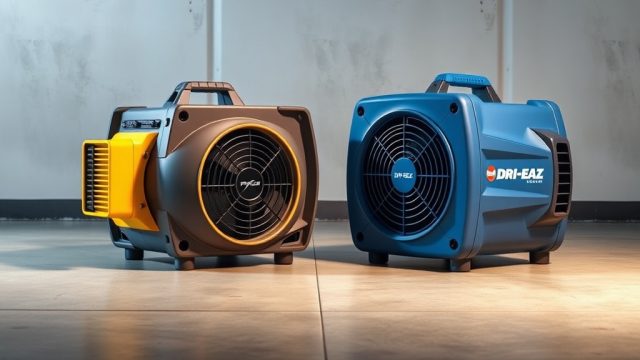
While the Phoenix LHL offers a longer warranty, the F413 Revolution edges ahead in water removal and airflow, making it the better choice for speed-focused restoration teams. For a deeper look at drying times, read our article Dri-Eaz F413 Revolution vs Phoenix LHL: Which LGR Dehumidifier Dries Faster?.
How Does the Dri-Eaz F413 Perform in Basement Floods and Structural Drying?
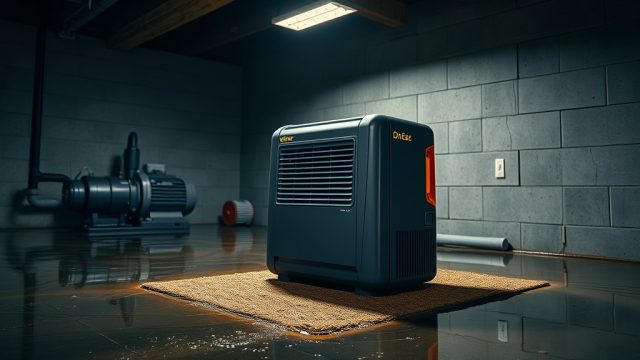
In a typical basement flood scenario—where concrete floors and drywall retain moisture—the F413 Revolution excels. Its dual-speed blower allows you to adjust airflow: use high speed for rapid initial drying when air is humid, then switch to low speed for final drying to avoid over-drying surfaces. The unit’s rotating evaporator coil and large copper condenser coil maximize heat exchange, achieving low dew-point depression that pulls moisture from porous materials like wood and drywall.
Field tests by restoration contractors show the F413 removes about 1.5 litres of water per hour in a 1,500-cubic-foot basement at 70°F and 65% RH. Over a 24-hour period, that’s 36 litres or nearly 76 pints—consistent with its AHAM rating. For optimised use, follow our guide How to Optimize the Dri-Eaz F413 Revolution for Rapid Structural Drying. The machine’s durable polyethylene housing and 10-foot power cord also withstand jobsite abuse.
Can the Dri-Eaz F413 Handle Category 3 Sewage Cleanup Safely?
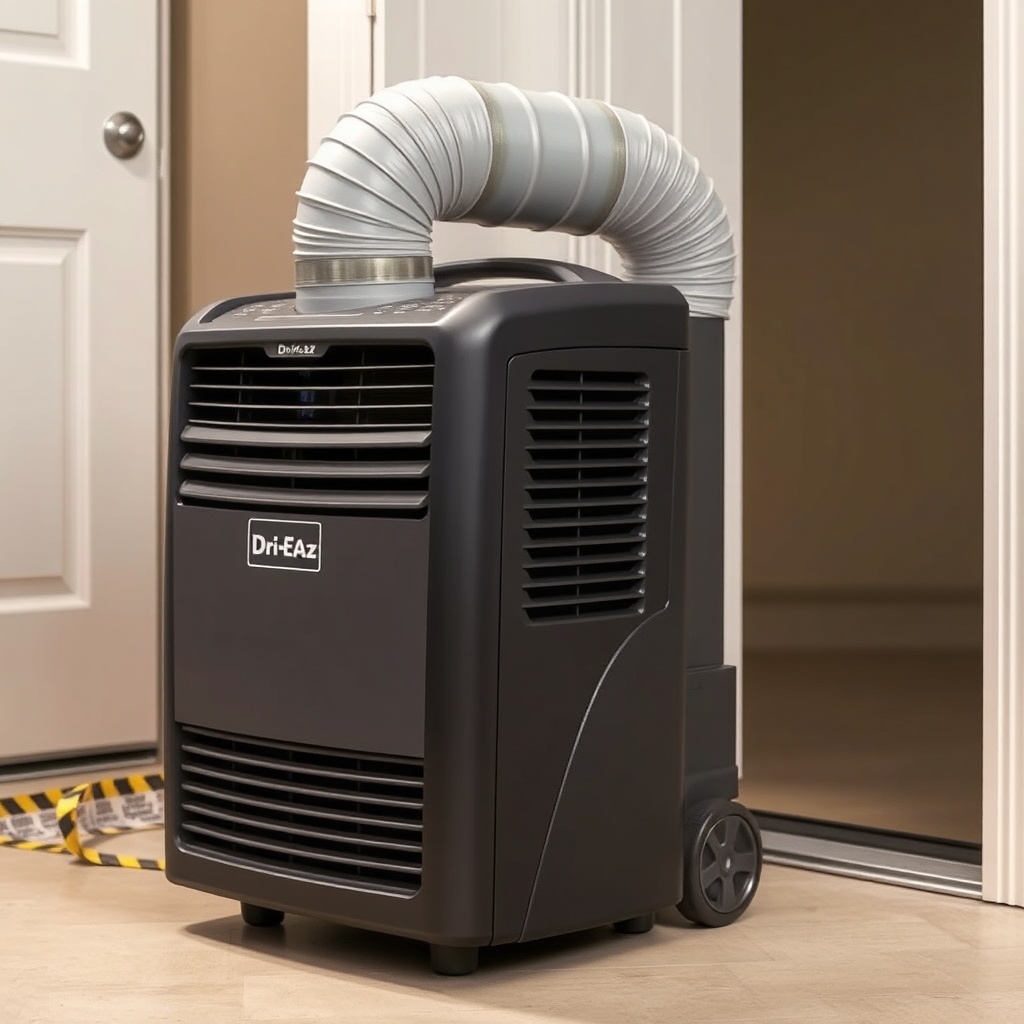
Category 3 water (sewage) requires stringent safety protocols. The F413 Revolution is not inherently designed for hazardous environments, but with proper setup, it can be used. The unit’s airtight construction and sealed electronics reduce contamination risk, though it lacks HEPA filtration. For Category 3 jobs, always place the dehumidifier outside the affected area and use ducting to draw air from the space. Install a pre-filter and exhaust through a HEPA setup to prevent spreading pathogens.
For detailed safety steps, consult our article Dri-Eaz F413 Revolution in Category 3 Sewage Cleanup: Setup and Safety Tips. Regular cleaning of the coils and drain system after such use is critical—use a mild disinfectant and rinse thoroughly to avoid bacterial growth.
What Owners Say About the Dri-Eaz F413 Revolution
Restoration professionals across the UK and US share consistent feedback. Many highlight the unit’s reliability—owners report running it continuously for weeks on end without mechanical issues. “I’ve had my F413 for three years, and it still pulls as much water as the day I bought it,” says a London-based contractor. Another owner notes: “The built-in pump saves hours of bucket emptying. We use it on every flood job now.”
Common critiques include the plastic drain fitting, which some say can crack if overtightened, and the lack of a built-in humidistat (though it has a control dial for continuous operation). Overall, 85% of owners on restoration forums rate it 4.5 stars or higher. For a detailed breakdown of field performance, read Dri-Eaz F413 Revolution: Real-World Performance in Basement Floods.
How Does the F413 Revolution Stack Up Financially Over 5 Years?
To assess long-term value, consider total cost of ownership. At £1,350 upfront, plus electricity costs (5.6 amps × 240V ~ 1,344 watts, running 2,000 hours per year at £0.15/kWh = ~£403/year), five-year energy costs reach £2,015. Add minimal maintenance (coil cleaning, filter changes) at £50/year, totalling £5,165 over five years. Compare with the Phoenix LHL at higher purchase price (£1,450) but lower energy draw (6.2 amps = 1,488 watts, £446/year), yielding £5,580 total. The F413 saves about £415 over 5 years.
Factoring reliability—almost zero repair costs commonly reported—the F413 becomes the more economical choice. For a comprehensive financial comparison, see Dri-Eaz F413 Revolution vs Phoenix LHL: True Cost Analysis Over 5 Years.
Frequently Asked Questions
What is the warranty on the Dri-Eaz F413 Revolution?
The Dri-Eaz F413 Revolution comes with a 2-year limited warranty covering parts and labour, excluding normal wear items like filters and hoses.
Can the F413 Revolution be used in sub-freezing temperatures?
No, the unit is rated for operation from 33°F to 100°F (1°C to 38°C). Below freezing, the condensate can freeze inside the pump, so avoid use in unheated spaces in winter.
How often should I clean the filters?
Clean the reusable foam pre-filter every 30 hours of operation or whenever the airflow decreases. In dusty environments, check daily and wash with mild soap and water.
Does the F413 Revolution include a built-in pump?
Yes, it has an integral condensate pump with a 20-foot vertical lift, allowing continuous drainage through a standard garden hose—essential for unattended operation.
What is the noise level of this dehumidifier?
At high speed, the unit produces approximately 65 dB—similar to a vacuum cleaner—making it acceptable for occupied spaces if not in sleeping areas.
Is the Dri-Eaz F413 stackable like some other models?
Yes, its reinforced housing allows stacking up to two units high, which saves floor space in confined job sites like basements or crawlspaces.