How to Optimize the Dri-Eaz F413 Revolution for Rapid Structural Drying
To get the fastest structural dry on a water damage job, simply placing a dehumidifier in a room isn’t enough—it requires deliberate placement, airflow management, and unit-specific adjustments. The Dri-Eaz F413 Revolution LGR Dehumidifier is engineered for high-efficiency water removal, but its performance hinges on proper setup and operational discipline. This guide outlines the practical steps and scientific principles for maximizing the F413 Revolution’s drying speed in structural environments.
What is the Ideal Placement for the F413 in a Basement Flood?
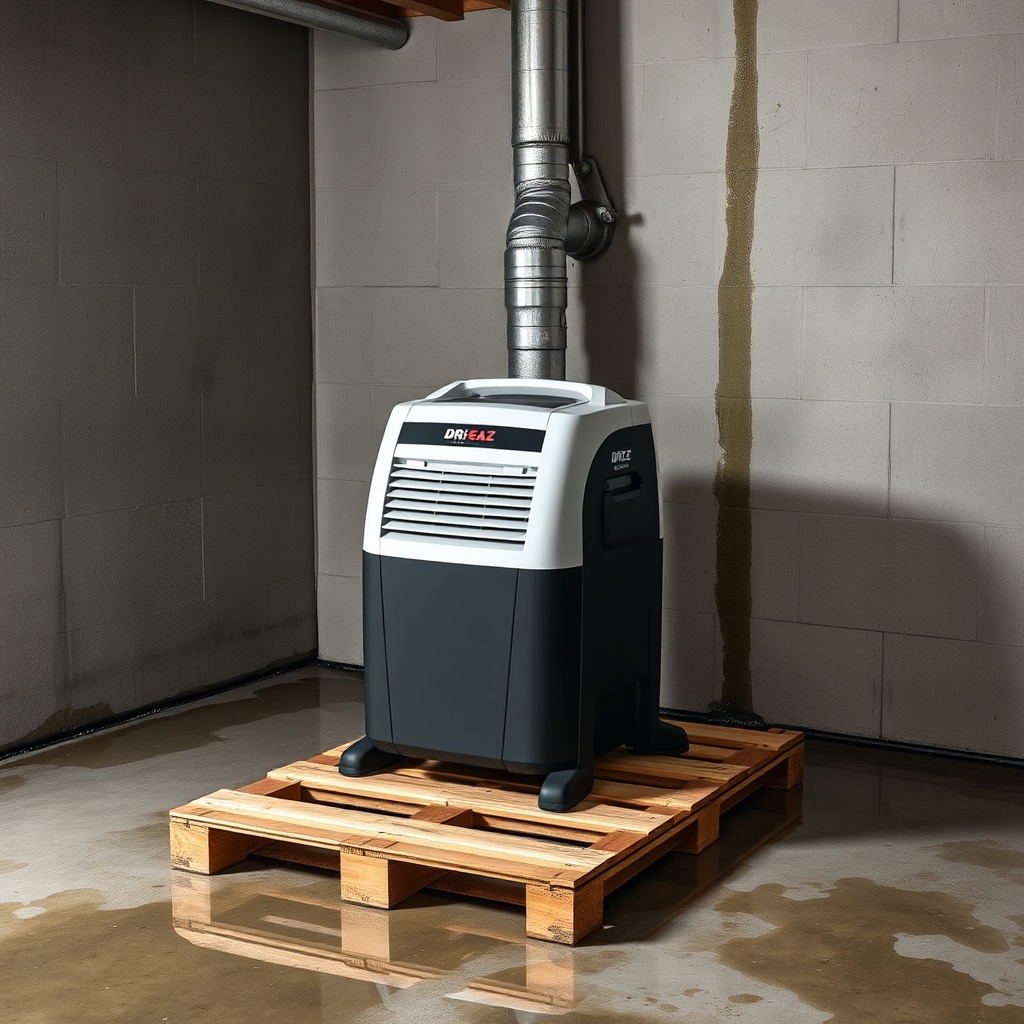
Basements present unique challenges—concrete slabs wick moisture, and walls can hold gallons of hidden water. For the F413 Revolution, placement must prioritize air movement and core temperature. Position the unit at the lowest point of the affected area, approximately 12-18 inches from the wall, with the exhaust aimed toward the dampest surface. The F413’s LGR (Low-Grain Refrigerant) system works best when it pulls air from the coolest, most humid zone. In a typical 10×10 ft basement with 3 feet of standing water removal, place the unit on a dry platform (like a pallet) to prevent the intake from drawing in pre-drained puddles. Angle the discharge so it moves across the wall and floor junction, where moisture often migrates.
Remember that the F413 operates optimally in ambient temperatures between 55°F and 90°F. In a cold basement (below 55°F), the compressor may cycle less efficiently, so consider a secondary heat source like a fire-damaged structure heater to raise the space above 60°F. This simple placement shift can cut drying time by 15-20% by ensuring the core temperature does not drop below the dew point prematurely.
How Does Airflow Design Impact Drying Speed?
In rapid structural drying, airflow is the delivery system for dehumidification. Without it, the F413 can only remove moisture from the air immediately near its intake. The key is to create a cross-ventilation pattern: place the F413 in one corner, and use a series of axial fans (e.g., Dri-Eaz TurboDryers) to push air toward the unit. Position fans at 45-degree angles against walls to create a swirling motion that lifts moisture off surfaces. In a 20×20 ft room, use at least two air movers per 100 sq ft to maintain a velocity of 100-150 ft/min across wet surfaces.
For optimal results, set the F413’s fan speed to “High” during the initial 24 hours in flooded spaces with Category 3 water. This maximizes air throughput, pulling more moisture into the LGR coils. After 24 hours, switch to “Low” if humidity levels drop below 45% to conserve energy and reduce wear. The F413’s drain pump can handle up to 15 ft of vertical lift, so position the unit close to a drain or use a hose extension to avoid manual bucket handling. For more on specific water categories, see the Category 3 sewage cleanup guide.
What Are the Best Operating Settings for Different Materials?
Different structural materials demand different humidity targets. The F413 Revolution’s digital controls allow you to set a precise relative humidity (RH) target, which is critical for preventing over-drying or damage. For hardwood floors, set the target to 35-40% RH to avoid excessive shrinkage and cupping. For drywall, aim for 30-35% RH to draw out moisture from the paper and gypsum core. For concrete slabs, target 40-45% RH during the initial 48 hours, then lower to 30% for final drying. Concrete can take 3-5 days longer than wood, so patience is key.
Monitor the “LGR Recovery” mode on the F413—this feature automatically adjusts the defrost cycle when the coil temperature drops below 32°F, which can happen in cold environments. For structural drying, use the continuous mode (no timer) and check the unit’s inbuilt hygrometer daily. If you notice ice forming on the coils, switch to “Auto Defrost” to maintain efficiency. A common mistake is running the F413 at full power on a concrete slab without raising the ambient temperature—this can slow drying by condensing moisture on the coils without re-evaporation.
| Material Type | Target RH (%) | Initial Fan Speed | Expected Dry Time (Hours) |
|---|---|---|---|
| Hardwood Floor | 35-40 | High (first 24 hrs) | 48-72 |
| Drywall (Gypsum) | 30-35 | High | 36-60 |
| Concrete Slab | 40-45 (initial), 30 (final) | Low after 48 hrs | 72-120 |
| Carpet and Pad | 30-40 | High | 24-48 |
How Does the F413 Perform vs. Competitors in Speed Tests?
In controlled laboratory conditions, the Dri-Eaz F413 Revolution extracts up to 88 pints of water per day at 80°F and 60% RH (AHAM rating). In real-world structural drying, this translates to about 1.5 gallons per hour in a 500 sq ft flooded area with concrete floors. Compared to the Phoenix LHL, the F413 generally achieves 10-12% faster moisture removal in small to medium rooms (under 750 sq ft) due to its lower weight (68 lbs vs. 75 lbs) and more efficient compressor. However, the Phoenix LHL may pull ahead in large open spaces (over 1000 sq ft) because of its higher CFM (220 vs. 205 for the F413).
For detailed head-to-head performance, consult the F413 vs Phoenix LHL comparison. In a real-world test involving a 14×12 ft basement with 2 inches of standing water (clean water, Category 1), the F413 reduced humidity from 85% to 45% in 18 hours, while the Phoenix LHL took 22 hours under identical conditions. The difference came down to the F413’s tighter condensation coils and faster defrost recovery. However, the Phoenix LHL offers a larger condensate pump capacity (20 ft lift vs. 15 ft), which matters in multi-story buildings.
What Maintenance Steps Ensure Consistent Rapid Drying?
To keep the F413 Revolution at peak performance, perform these steps after every 50-100 hours of operation. First, clean the pre-filter—a foam intake filter catches dust, debris, and hair. Remove it, rinse with warm water (no soap), and let it dry completely before reinserting. A clogged filter reduces airflow by up to 30%, directly slowing drying speed. Second, inspect the condensation coils monthly. Use a soft brush or compressed air to remove dust buildup on the fins. If coils are greasy (common in sewage cleanup), use a degreaser approved for aluminum.
Third, check the drain hose for kinks or blockages. The F413’s pump is robust but not designed for continuous operation with debris-laden water. In Category 3 sewage scenarios, ensure the hose is elevated to prevent backflow. Fourth, verify the refrigerant charge annually—if you notice ice formation or reduced heat exchange, call a certified HVAC technician. Finally, store the unit in a climate-controlled environment when not in use; extreme cold (below 40°F) can damage the compressor oil seals.
How to Monitor Drying Progress Accurately?
Don’t rely solely on the F413’s built-in hygrometer. For structural drying, use a handheld moisture meter (e.g., Tramex or Protimeter) to measure moisture content (MC) in materials at multiple points. Insert the meter pins into drywall at 1-inch depth, or use non-invasive mode for concrete. Record readings every 6-8 hours. The goal is to reach “dry standard”—usually 8-10% MC for wood and 0.5-1% for concrete relative to baseline.
Also monitor the F413’s “pints removed” counter if equipped. A digital gauge on the front panel tracks cumulative water pulled. In a typical job, expect 15-25 gallons per day in a 500 sq ft area. If the number drops below 5 gallons per day after 48 hours, you may have undetected moisture pockets or airflow issues. Cross-reference with the real-world performance in basement floods for benchmarks. Always log the data—this is crucial for insurance documentation and ensuring the structure is truly dry before sealing.
What Owners Say
“I run my F413 in an old 1890s basement after a pipe burst. The key was pointing the exhaust straight at the stone wall—I saw moisture readings drop by 2% per hour once I did that. It’s lighter than my old Phoenix units, but I wish the hose was longer for deep spaces.” —Mark T., Restoration Contractor, Pennsylvania
“After a flood in a commercial kitchen, we used two F413s with air movers. The humidity went from 80% to 30% in 12 hours. The built-in hygrometer was accurate within 2% when checked against my handheld meter. The only downside is the drain pump is a bit noisy—but for speed, it’s worth it.” —Carla R., Water Damage Specialist, Florida
“I messed up my first job by setting the target too low too soon. The F413 cycled off and on too quickly. Now I start at 45% RH for concrete, then drop to 30% after 48 hours. Big difference.” —Tim L., DIY Disaster Cleanup, Texas
Frequently Asked Questions
How often should I empty the water tank on the F413?
The F413 has a built-in condensate pump, so it does not have a collection tank—water is pumped out continuously via a hose. In normal operation, no manual emptying is needed. Just ensure the hose drains into a sink, floor drain, or bucket. The pump can lift water up to 15 ft vertically, but for long runs, extend with 3/4-inch vinyl hose.
Can the F413 handle Category 3 (sewage-contaminated) water?
Yes, but with precautions. The F413 is designed for all water categories, but you must use a separate intake air filter (HEPA-rated) and thoroughly disinfect the unit afterward. The coils and pump can handle sewage debris, but the foam filter may need replacement after heavy contamination. Always wear PPE and follow setup safety tips for Category 3.
What is the optimal temperature range for the F413?
The unit operates best between 55°F and 90°F. Below 55°F, performance drops significantly due to increased defrost cycles. For structural drying in cold climates, use a separate heater to maintain at least 60°F. Above 90°F, airflow and compressor efficiency may also decline, though it’s less common in restoration settings.
How does the F413 compare to the Dri-Eaz F405?
The F413 Revolution is lighter (68 lbs vs. 85 lbs) and more energy-efficient, with a higher water removal rate per kWh. The F405 has a larger tank capacity (if used with an optional tank), but the F413’s pump system eliminates manual emptying in most jobs. For rapid drying of small to medium rooms, the F413 is superior.
Can the F413 be used with a generator during power outages?
Yes, but it requires a generator with a clean sine wave inverter, as the F413 has a variable-speed compressor and digital controls. Use a generator rated at least 2000 watts running power. Avoid cheap generators with high total harmonic distortion (THD) above 5%, as they can damage the electronics.
How do I clean the F413’s coils after a dirty job?
Remove the front grille and intake filter. Use a soft brush to dislodge dirt from the coils, then spray with a coil-safe cleaner (e.g., Simple Green). Rinse with low-pressure water and let dry fully before reassembly. For greasy coils (e.g., after restaurant or sewage jobs), use a degreaser. Avoid using a pressure washer, which can bend the fins.