Dri-Eaz F413 Revolution in Category 3 Sewage Cleanup: Setup and Safety Tips
When dealing with Category 3 water—the black water from sewage backups, floodwater containing silt, or standing water contaminated by chemicals—the drying process requires specialized equipment and strict safety protocols. The Dri-Eaz F413 Revolution LGR dehumidifier, with its high-efficiency compressor and low-temperature performance, is a powerful ally in these scenarios. However, improper setup can expose workers to biohazards or spread contaminants. This article offers practical guidance from seasoned restoration professionals on using the F413 Revolution safely and effectively in sewage cleanup jobs.
Why Use the F413 Revolution for Category 3 Water Instead of a Standard Dehumidifier?
Standard refrigerated dehumidifiers often struggle in the cold, damp environments typical after a sewage backup, especially in basements or crawl spaces. The F413 Revolution is an LGR (Low Grain Refrigerant) unit, meaning it has a larger coil and a more efficient compressor that can extract moisture even when ambient temperatures drop to around 55°F. In Category 3 scenarios, the water load is heavy and the air can be saturated. The F413 can pull up to 108 pints per day under ideal conditions (80°F, 60% RH) and still perform well at lower temperatures. This consistent dehumidification speed is critical to prevent secondary microbial growth, which can begin within 24-48 hours. For a deeper dive into how it handles real-world basement floods, see our Dri-Eaz F413 Revolution LGR Dehumidifier: Real-World Performance in Basement Floods.
What Is the Correct Setup for the F413 Revolution in a Sewage Contaminated Space?
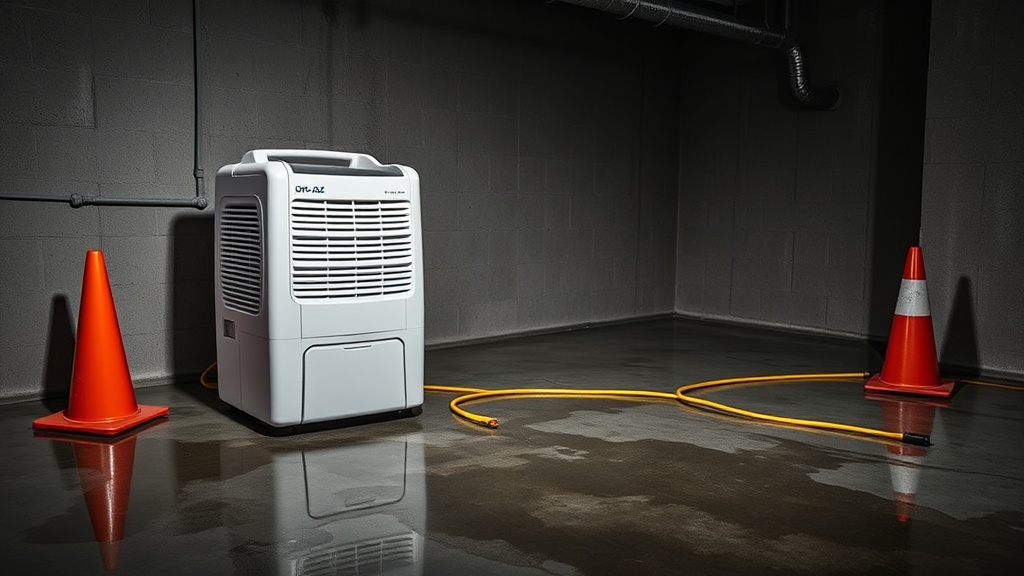
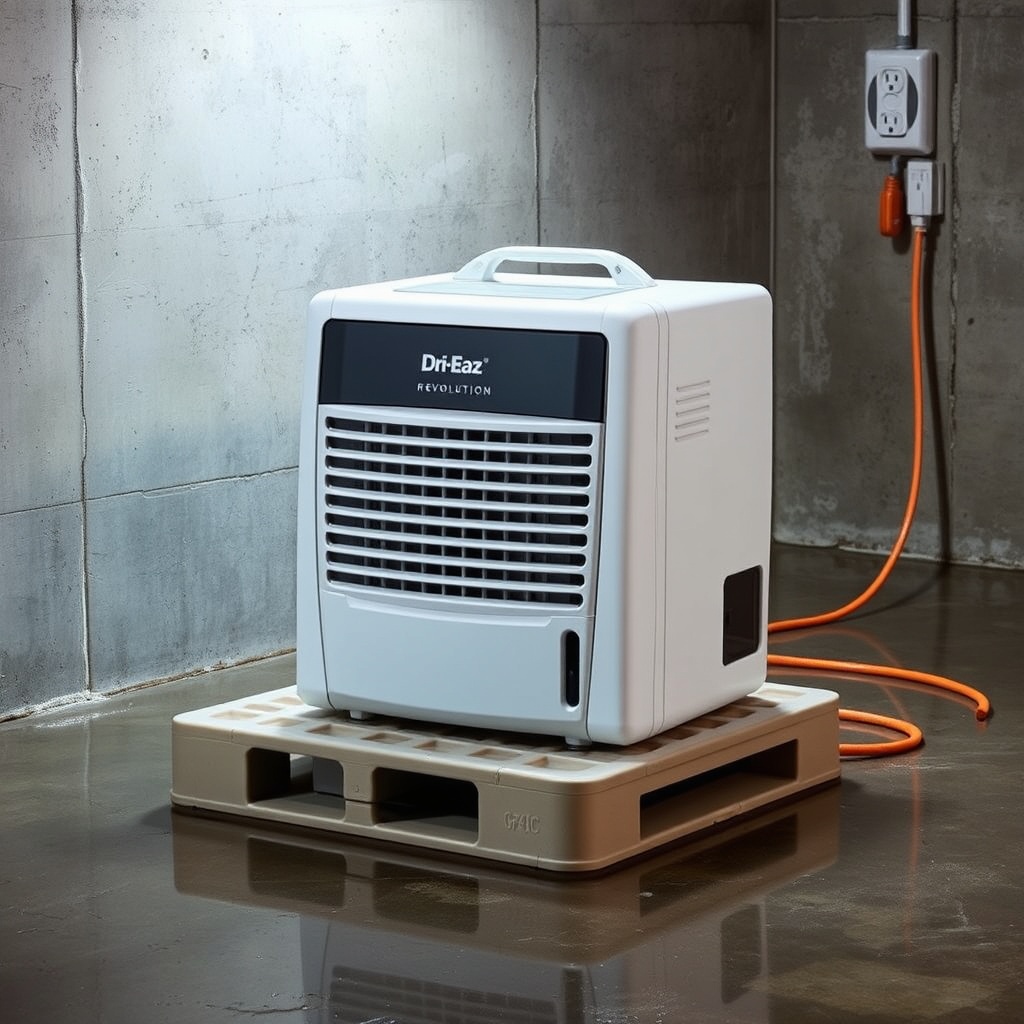
Before placing the dehumidifier, the affected area must be physically cleaned and disinfected. Once biohazardous materials (sludge, sewage solids) are removed, you can set up the F413 Revolution. Position the unit on a dry, level surface away from direct contact with any remaining moisture. Ensure the intake grille (front and sides) is at least 12 inches from any wall, and the exhaust (top) is unrestricted. In a room with standing water, place the dehumidifier on a raised platform—like plastic pallets or a water-proof block—so the unit’s legs stay dry. The F413’s 15-foot power cord with GFCI protection is a must, but always connect it to a GFCI-protected outlet. For rapid drying, you’ll want to create negative pressure by sealing the area and using the dehumidifier alongside an air mover. Our guide on How to Optimize the Dri-Eaz F413 Revolution for Rapid Structural Drying covers airflow arrangements in detail.
What Are the Key Safety Precautions When Running the F413 Revolution Around Sewage Water?
Personal protective equipment (PPE) is non-negotiable. Restoration technicians must wear full-face respirators (N95 is insufficient for sewage), disposable coveralls, rubber boots, and nitrile gloves. The F413 Revolution itself does not filter air; it only removes moisture. Any airborne pathogens from sewage can circulate around the job site. Therefore, the dehumidifier’s intake should never draw air from areas where dried sewage dust might become airborne. Also, never allow the F413 to sit in standing water—electrocution risk exists even with GFCI. If the unit’s power cord shows any damage, replace it immediately. After the job, clean the dehumidifier’s exterior with a disinfectant wipe, and wash the washable foam filter with warm soapy water. Never use bleach on the filter as it can degrade the foam. The F413’s internal coils can be disinfected by running the unit in a well-ventilated area after spraying a safe surface disinfectant (check the manual for approved chemicals).
How Does the F413 Revolution Compare to Other LGR Units Like the Phoenix LHL in Sewage Cleanups?
Both the Dri-Eaz F413 Revolution and the Phoenix LHL are top-tier LGR dehumidifiers, but they differ in key areas that matter in Category 3 work. The F413 is lighter (about 96 lbs) and has an integrated handle, making it easier to maneuver through narrow doorways and up stairs. The Phoenix LHL is heavier (115 lbs) but often has a slightly higher max extraction rate (up to 114 pts/day at 80°F, 60% RH) and a more robust frame. For sewage cleanup, weight and portability are crucial because you may need to drag the unit over contaminated surfaces to clean it. The F413’s lower weight reduces back strain when moving it to decontamination areas. However, the Phoenix LHL’s slightly larger coil can handle higher moisture loads in large open spaces—think a flooded office after a sewage backup. For a head-to-head comparison, read our Dri-Eaz F413 Revolution vs Phoenix LHL: Which LGR Dehumidifier Dries Faster?. In practice, many contractors choose the F413 for its portability in tight residential sewage jobs and the LHL for large commercial losses.
Can the F413 Revolution Handle the High Humidity of a Sewage-Contaminated Crawl Space?
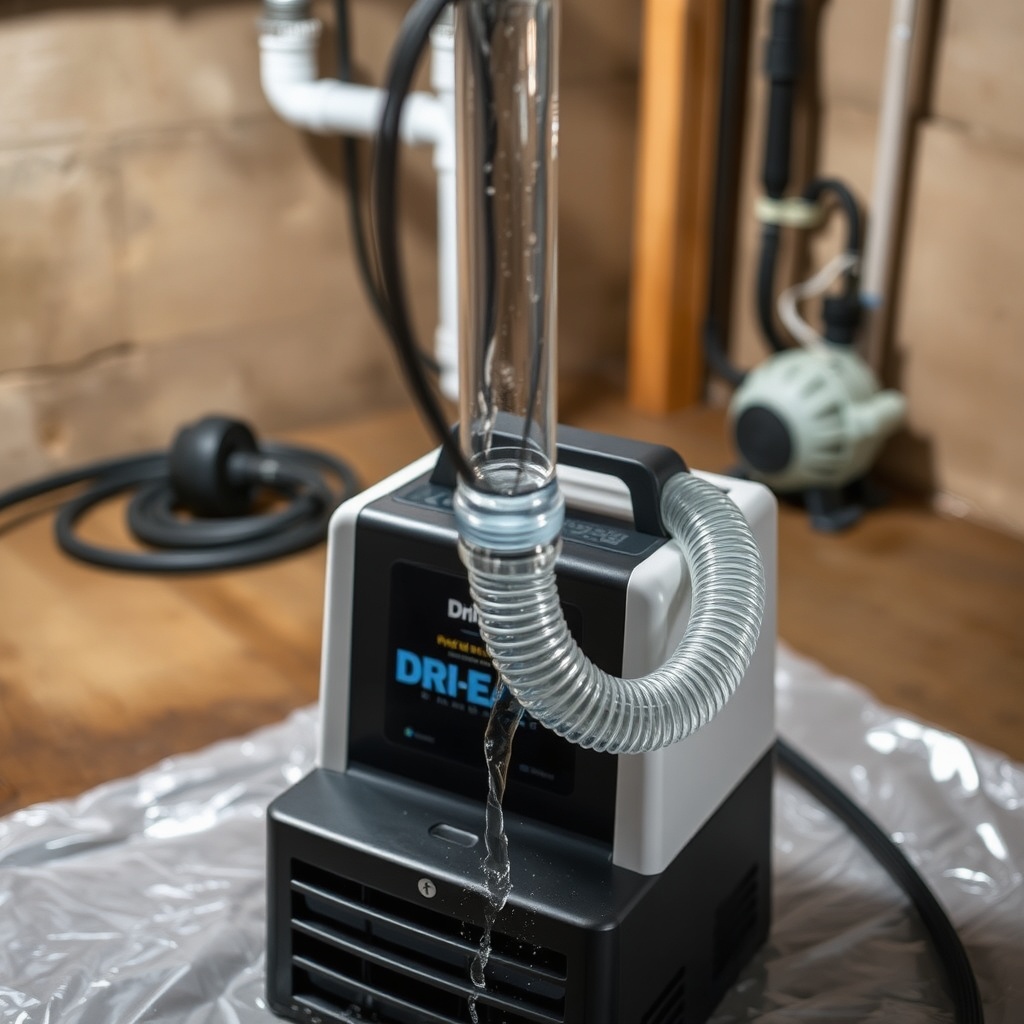
Yes, and it’s actually a preferred unit for crawl spaces because of its low-profile design (20.5 inches high). Category 3 water in a crawl space presents unique dangers: mold can spread rapidly, and airborne spores can enter living areas. The F413’s ability to operate at low temperatures (down to 33°F coil temperature) means it can function effectively in the cooler, damp environment of a dirt crawl space. Setup requires extra care: place the unit on a plastic sheet to prevent it from contacting contaminated soil. The built-in pump can lift condensate up to 18 feet vertically, allowing you to drain water into a sink or outside rather than letting it pool on the contaminated floor. The pump’s check valve prevents backflow, which is critical to avoid reintroducing sewage-laden water into the dehumidifier. Just remember to check and clean the pump filter after each sewage job.
| Symptom / Condition | Severity Level |
|---|---|
| F413 unit is running but no water in bucket or hose; coil iced over | Needs Attention Soon |
| F413 unit is sitting in 1/4 inch of standing sewage water | Critical – Immediate Shutdown |
| Filter clogged with visible sewage debris or dirt | Needs Attention Soon |
| Unit making unusual grinding or rattling noise from pump compartment | Needs Attention Soon |
| F413 power cord is frayed or has exposed wires | Critical – Immediate Shutdown |
| Onboard humidity readout shows no change after 4 hours in sealed room | Needs Attention Soon |
What Are the Best Practices for Cleaning the F413 Revolution After a Sewage Job?
Decontaminating the dehumidifier after Category 3 water exposure is essential to prevent cross-contamination. First, disconnect power. Remove the washable foam filter and hand-wash it with a mild detergent and warm water. Do not use a washing machine. Allow the filter to dry completely before reinstalling. Use a solution of one part white vinegar and three parts water to wipe down the exterior and the intake/exhaust grilles. For the internal coil, it’s safer to take the unit to a clean area and run it for 5-10 minutes with a disinfectant spray (like a hospital-grade quat) directed into the intake. This allows the disinfectant to coat the coil. After that, run the unit for 30 minutes in a ventilated space to dry the coil. Never submerge the unit or spray water directly into electrical components. The condensate pump and hose should be flushed with a bleach-water solution (1 cup bleach to 5 gallons water) to kill any biofilm inside. Replace the hose if it shows cracks or discoloration.
What Owners Say About the F413 Revolution in Sewage Cleanup
Experienced restoration technicians often note that the F413 Revolution excels in Category 3 work for its portability and pump reliability. One Iowa-based contractor mentions, “I’ve used the F413 in six sewage backups this year. The pump can handle the lift from a basement to a sink no problem, but you have to clean the filter after every single job or it will clog with silt. That’s an extra step, but it’s worth it for the drying speed.” Another New York restorer observes, “The unit is light enough to carry up a flight of stairs, which is a godsend when you’re dealing with a flooded bathroom. My only gripe is the plastic housing gets scratched easily when you drag it over concrete, but that doesn’t affect performance.” A common consensus is that the F413 is a workhorse for residential sewage losses, but its smaller capacity compared to the Phoenix LHL means you’ll want two units for large commercial spaces.
Frequently Asked Questions
1. Can I use the Dri-Eaz F413 Revolution in a room with active standing sewage water?
No. The unit is not designed for submersion. Ensure the area is physically cleaned and no standing water remains before operating the dehumidifier. Place it on a dry, elevated surface to avoid electrical hazards.
2. How long does a typical sewage cleanup job take with the F413?
Depending on the size of the affected area and the extent of water damage, expect 3-5 days of continuous operation in a sealed room. The F413 can remove up to 108 pints per day under ideal conditions, but actual time depends on humidity levels and temperature.
3. Does the F413 Revolution filter out bacteria and mold spores from the air?
No. Standard dehumidifiers only remove moisture. They do not have HEPA filters. Air scrubbing with a separate HEPA air filtration device is necessary for removing airborne biohazards.
4. What should I do if the dehumidifier’s pump stops working?
Check the pump filter for clogs (common after sewage jobs). If the filter is clean, inspect the hose for kinks. The pump has a check valve; if it fails, replace the valve. If the pump still doesn’t operate, contact Dri-Eaz service. Do not run the unit if the pump fails, as water will not be drained and may leak.
5. Can I use an extension cord with the F413 Revolution?
It is strongly discouraged. The unit requires a dedicated 15-amp GFCI outlet. If you must use an extension cord, use a heavy-duty, 12-gauge cord no longer than 25 feet, and only one cord. Never daisy-chain cords.
6. How do I know when the dehumidifier is ready for the next job?
After proper cleaning and drying, verify the filter is clean, the pump is primed, and the coil is ice-free. Run the unit in a clean environment for one hour to confirm it pulls moisture. The owner’s manual recommends a maintenance checklist after each Category 3 job.